Advancing Healthcare Update- The 2023 Clock is Ticking

The Macro Environment

2023 led off with focus on creating better consumer experiences and outcomes while tackling the rising cost of delivering care.  Despite the industry’s collective best efforts, rising healthcare costs projected for 2022-2031 at an average of 5.4% continuing to outpace the average growth in GDP of 4.6% for the same time period.

While CMS issued a requirement that by 2021 hospitals must post their pricing, cost transparency and billing practices continue to make headlines as consumers out of pocket costs and healthcare debt continue to rise. According to the Consumer Financial Protection Bureau,  medical debt in collections is at $88B  affecting 1 in 5 Americans.  More consumers are in high deductible plans, 50% as of 2021, while navigating right site of care to keep expenses down has become increasingly jumbled. Solutions that prevent or reduce the size of medical debt and avoid consumers delaying care only later to have most costly care meet consumer needs while also aligned with value-based program goals.

Environmental challenges are many. However, with springtime came the official end of the Public Health Emergency(PHE). The rise in CPI was 3% over the year in June versus much higher rates the previous year. The end of the PHE for many was a sigh of relief, while for others especially marginalized populations on Medicaid, it meant their healthcare insurance coverage was at risk. The innovative all hands-on deck approaches to outreach and the FCC allowing SMS messaging for enrollment in healthcare coverage, given according to PEW research 97% of individuals with incomes less than $30,000 have cellphones, holds promise to restore coverage or find alternatives for many.

Healthcare investments have been more disciplined for the most part while select large investments of $100Ms leave many wondering will the math ever work. Friday Health Plans became defunct and Bright Health still struggling sold their CA Medicare Advantage business to Molina. For others, a pot4ential course correction as industry veterans have entered to drive to profitability e.g. Castlight was acquired by Morgan Health’s Vera in 2022 and Mark Bertolini, former Aetna CEO took the helm at Oscar this Spring. Discipline and value creation will continue to dominate with in addition to larger investments, a growing number of subspecialty niche start-ups drawing seed rounds.

My Top 5

Chronic care continues to monopolize spend and combined with behavioral health according to the CDC, accounts for 90% including diabetes, heart and vascular disease, chronic kidney disease and others. While the struggle with high cost short term investment continues, expansion of BH services and addressing the root cause of most chronic conditions including coverage for anti-obesity drugs is high on everyone’s radar. Telehealth and wraparound coaching solutions hold promise to maximize results and maintain progress, warranting consideration of investment in both cases.

Behavioral Health including Substance Use remains a top concern post Covid. As of 2022, almost 20% of US adults had any mental health issue and 7.7 % reported a substance use disorder with 5.7% being Alcohol.  More emphasis on moderating alcohol use must continue due to the devastating consequences on overall health and society. If we could only do as well at increasing access to healthcare services, that has been the case with increased access to alcohol over the last decade we would be in much best shape to meet consumer need.  The rise in number of airport bars and previously designated family restaurants obtaining liquor permits and powerhouse consumer brands such as Coke® creating premixed cocktails, is certainly an indication of rising demand. While it may be true with more availability the average distribution per location may decrease, according to the Tax and Trade Bureau reports it appears volume distribution is also increasing dramatically.  Not suggesting prohibition here, just more dedicated focus on importance of alcohol avoidance to overall health and life optimization and services for those that have already become entrapped.

Senior health with growing volume and higher demand for better experiences and curbing costs continues to draw intense interest from the public and private markets. Investments in value based care have grown and CMS continues the plan to move 100% of traditional Medicare beneficiaries and most Medicaid beneficiaries to some form of value based care arrangements by 2030.  ACO REACH was introduced last year and another model Making Care Primary (MCP) announced by CMMI to launch in eight states was announced in June.

Homecare continues to receive recognition as a significant lever to curb costs and improve outcomes especially in seniors as preference remains strong to stay in their homes. United Health Care claimed two of the largest home care acquisitions, LHC and Amedisys, and trailblazers in the marginalized population space such as Equality Health entered the home care space de novo.  

Healthcare Workforce issues have been taken very seriously with advancements in bringing staff back in house and corresponding costs down with forward looking coalition building to create pipelines of job candidates, years in the making.  While in person care is the backbone of our healthcare system and poses the biggest risk in the face of shortages, care extenders, remote monitoring and virtual visits continue to expand and receive high marks from consumers with an HHS survey showing 22% of adults surveyed on average reported having a telehealth visit in the last four weeks. Rates in low income and marginalized populations reported lower rates of telehealth  use as of this report but guidelines for equitable access have been provided by HHS to close this gap.

With the bulk of summer vacations in the rearview mirror and the looming 2024 elections already creating distraction, there are still four months in 2023 to advance what we as an industry set out to do – focus on better consumer experiences and affordability, address root causes of chronic condition and behavioral issues, mitigate work force issues especially professional shortages, and deliver results in the form of improved enterprise value and equitable outcomes for all consumers.  

Healthcare’s 2023 Promise

2023 kicks off with promise of medical and technical advancements, fixes or patches to what many have been deemed a broken healthcare system, and all eyes on creating better consumer experiences and outcomes while tackling the rising cost of delivering care. 

Environmental challenges remain as the rise in CPI still topped 7% in November and predictions of a recession loom.  For the average consumer, this can mean added stress and feelings of depression, inability to pay for health care-even copays and coinsurance, delayed care plus greater demands on community organizations that provide support during tough times.  For the Medicaid population, especially those covered under the Public Health Emergency post PHE numerous Medicaid enrollees will need to find alternatives while other who still qualify will need to redetermination, certainly a top priority for Medicaid MCO plans and delivery systems with many States engaging both for help.  Add to this the COVID variant saga that just won’t quit has resulted in fatigue for consumers, providers and businesses alike.

Healthcare investments are trickling in, mostly early stage and series B round funding. Certainly, the lessons learned from the hype cycle in digital and some next gen health plans, with company valuations down from their highs by 75 to 90% in 2022 are carrying over into 2023.  A more discipline approach is on everyone’s mind given these health care specific downward trajectories plus highlights from crypto’s fall from grace has everyone on high alert adding more rigor to review of the next best thing.

Consumer focused strategies continue to take hold from everything engagement to new entrant retail. The shift to a health system that is life centric while hospitals remain a vital component, but part of a much larger eco system that includes home care, retail, and community-based organizations together driving value. Successful consumer engagement entails being available with the right services and tools to meet consumer’s needs based on where they are on their health journey at any given moment. Rates of chronic conditions and obesity have not budged and continue to represent 80+% of the health care spend. Well integrated smart care extenders and remote monitoring and care across medical-behavioral-SDoH will help to mitigate avoidable acute care visits in all populations and allow seniors to live at home longer.  Healthy food will continue to promoted as a solution while fighting gravity toward easy, quick and affordable high calorie, high salt, fat laden food everywhere consumers turn. With studies demonstrating results like those compiled by the Food is Medicine coalition -reduction in overall medical costs by 16%, ER visits by 58%, hospital admits by 49%, and nursing home admits by 72%-doubling down on messaging and providing convenient, affordable access to better choices makes good health and business sense.

Investments in value based care have grown and CMS continues on plan to move 100% of beneficiaries to some form of value based care arrangements by 2030 while homecare has received recognition as a significant lever to curb costs and improve outcomes.  More so than previous years there is greater emphasis on operational efficiency and workforce solutions as health systems according to a report by the AHA have been crushed by rise in acuity (9.9%) and higher drug (>36%)and labor costs (19%); while payment rates have not kept up, (Medicare ‘22 increased 2.4%, labor costs up 6.5%).  Creative solutions are emerging to support the nursing workforce include permanent staffing solutions, virtual nursing support, and care extenders hold promise to reduce shortages and mitigate burnout.

In summary, 2023 will be a year focused on meeting consumer needs particularly targeting what they value, addressing work force issues and administrative complexity, and delivering results in the form of equitable outcomes for all consumers, affordability, and improved enterprise value.  

Rose Maljanian Chairman & CEO HealthCAWS

Sharing Insights at State of Population Health

Rose Maljanian Chairman and CEO HealthCAWS

I was pleased to share my insights at the first Annual PHA State of Population Health event on January 27th regarding my top 5 issues for population health management heading into 2022 and what I believe are the top solution areas that will contribute to improving health, quality and affordability.

Challenges

  1. Behavioral health, including increased rates of depression, anxiety, stress and overdose
  2. Chronic disease screening, prevention and management including diabetes, cardiac, kidney disease and cancer
  3. Senior health and home care
  4. Healthcare workplace shortages and burnout
  5. Health equity and SDoH

Top Solutions across areas of need:

  1. Continued expansion of tele-health visits with documented outcomes
  2. Home based proactive, well-coordinated care
  3. Digital care extenders
  4. Friction reducing solutions for providers and teams
  5. Strategies that address barriers to creating health equity

Listen to my full presentation:

Listen to all presentations here.

HealthCAWS Welcome 2022!

Welcome 2022!

While we start the year in what feels like a setback, we are armed with vaccinations, rapid testing, advanced digital health technology, promising therapies and even greater resolve.

Our collective stronger resolve must be channeled to address the ongoing pandemic and the collateral damage thereof. 

  • Consumers are suffering in many facets of their life from health and financial to disrupted careers and relationships.  Previously marginalized persons have yet to recover or gain hope that there exists a path to break the cycle of poor health and poverty and many seniors are not experiencing the golden years they had anticipated.  All requiring inviting, comprehensive support.
  • Healthcare and frontline workers have barely had a reprieve from the demands the overwhelming need imparts to them.  They deserve support in the form of tools and a safe environment to do what they do best as well as understanding and recognition for what they are facing day to day.
  • Innovative organizations need the paths cleared to improve quality and access and mitigate compromising social factors and health disparities. In addition, a fair business model that rewards their value contributed and affords investment in tomorrow’s innovation today.

In short, the total health of individuals, the healthcare workforce and organizations must be advanced to overcome the current pandemic, dramatically rising rates of behavioral health issues, poverty, social isolation and the much needed catch-up in chronic condition prevention and treatment.

With gratefulness, humility and spirit of partnership, looking forward to doing my small part to advance the cause in 2022!

Rose Maljanian

Chairman & CEO HealthCAWS

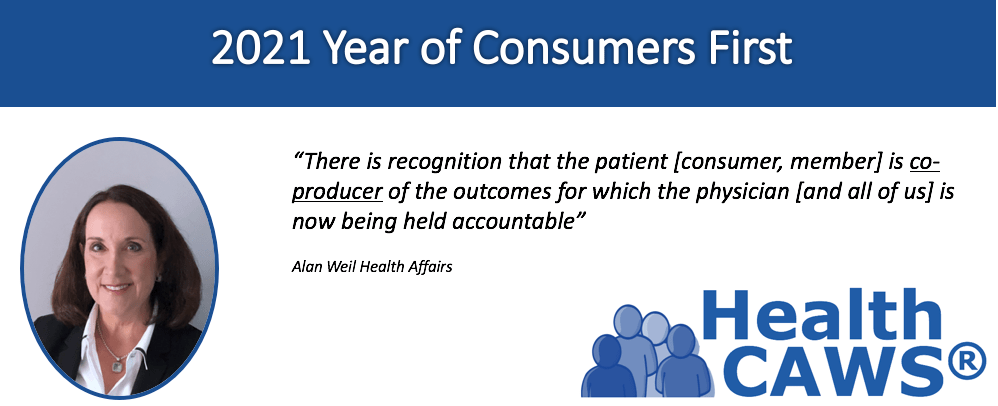
Welcome 2021- Consumer Experience and Outcomes including Cost and Quality Go Hand in Hand

Consumers have been through enough. Make 2021 easier by accelerating companies that hit the mark and sun setting outdated practices.

Accelerate

  • Well integrated virtual care options, medical & behavioral
  • Primary cares that take full accountability
  • Timely home care and hospital at home
  • Community-based one stop shops visits, diagnostics, meds
  • Use of navigators and well-trained proactive care extenders
  • Consumer-caregiver adoption of intuitive PHRs
  • Use of early indicators from voice of the consumer & caregiver

Eliminate

  • PCP offices that run 9-5, break at 12, busy phone lines
  • ER as default path to get attention and action
  • Outdated medical necessity criteria ignoring early indicators
  • Delays in care due to convoluted processes
  • Staffing warm bodies versus proactive empathetic persons
  • Disrespect for consumer and caregiver time and resources

Unrelenting focus on consumer needs -right by consumers, smart business. It will show up through positive outcomes or consumers will vote with their feet by moving to a service that does hit the mark.

If you are in the business of accomplishing the above and believe you are not already on my radar, would like to hear about your great work!

https://www.linkedin.com/posts/rosemaljanian_consumerexperience-consumerengagement-populationhealthmanagement-activity-6752566939349991424-ANAH

#consumer experience #population health #valuebased care #outcomes

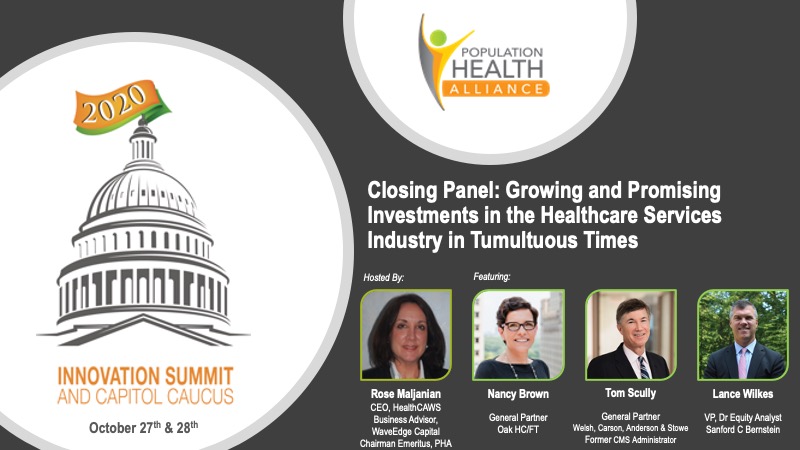
Growing and Promising Investments in the Healthcare Services Industry

October 13, 2020 HealthCAWS CEO Rose Maljanian to host Investor’s panel “Growing and Promising Investments in the Healthcare Services Industry in Tumultuous Times” at the annual Population Health Alliance Innovation Summit and Capital Caucus October 27th, 2020. Read more.

Innovations in Senior Care and Supports-Holding the Gains and Accelerating Progress

As we enter a new era of care delivery and coordination of care for the growing population of seniors, there are key principles informed by our past, gains we must hold, and new demands to meet as a result of the pandemic.  Gratefully to all, the spirit of rapid problem solving and innovation has never been stronger to deliver the desired quality, safety, convenience and affordability for seniors to live life to their fullest potential, said Rose Maljanian Chairman & CEO HealthCAWS and Chairman Emeritus Population Health Alliance.

Read the article at: https://www.bettermedicarealliance.org/blog-posts/innovations-in-senior-care-and-supports-holding-gains-and-accelerating-progress/

#populationhealth #seniors #medicareadvantage #innovation

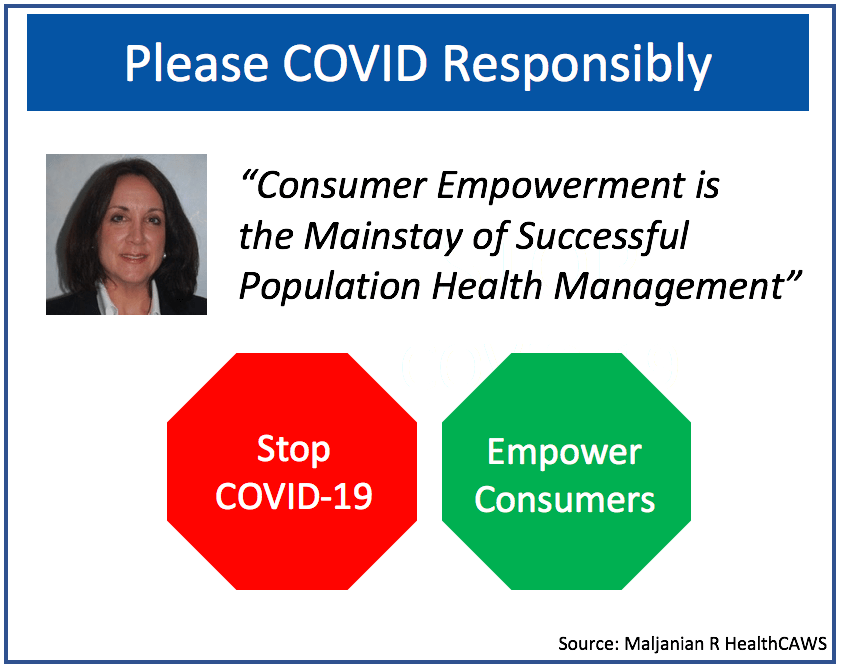
Consumer Empowerment – the engage-able moment too precious to waste.

Under the current pandemic situation, the absolute first line of defense is to contain the crisis and protect consumers, especially the vulnerable and acutely ill at high risk for morbidity and death. As we move to the next phase of the containment effort, the population health management model instructs consumer empowerment as the mainstay.  

Today, consumers, old and young are certainly more conscious of first line defense against illness – limiting exposure (distancing, good handwashing, limited sharing of personal items) and bolstering individual resistance through good nutrition, physical fitness, sleep and reduced stress.  For those with underlying health issues such as diabetes, obesity, HTN, and hx respiratory illness, studies are increasing putting the spotlight on their risk and the need to vigilantly prevent or manage these conditions as real risks today, rather than something that may or may be seriously limiting later in life.

A successful Population Health Management strategy begins with leveraging all available data, including data gleaned from the consumer real-time, to understand individual risk factors and needs. Based on the insights, offer the best programs and tools to empower active consumer participation in care and ongoing self- management of their health, their risks, their conditions and where possible getting assistance to address their social factors.  Early and regular measurement of individual and population success against goals and performance metrics affords organizations and individual consumers with the insight to try an alternative when one tool or combination of tools is not resulting in the best possible health and cost outcomes. Adapt, Measure, Repeat. Adapt, Measure, Repeat.

In all the chaos of COVID-19 what emerges is an opportunity for us to step up our population health management efforts –as the engage able health and life changing moment for consumers before us now is simply just too precious to waste.

#consumer engagement #population health #pha #COVID-19

Thank you to the Population Health Alliance (PHA) for recognizing accomplishments as Chairman of the Board

MaljanianPHAAward

Thank you to the Population Health Alliance (PHA) for recognizing my accomplishments as Chairman of the Board at the annual Innovation Summit and Capital Caucus in Washington, DC earlier this week. Great event with much discussion on the PHA Population Health Management Framework with VBC as an accountability/financial lever and addressing SDoH as the key lives lever for success all around. PHA represents a group of talented and dedicated leaders from across the healthcare ecosystem keeping the focus on what matters most-PEOPLE. Join the collective mission-together we can improve lives affordably and sustainably. 

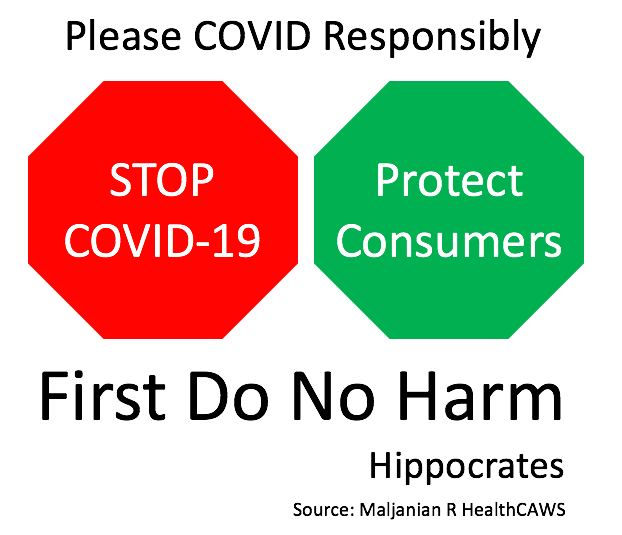
Please COVID responsibly …and if you see something say something

In this time of COVID 19 crisis, many consumers are confused and afraid for their health and futures. It is no wonder.  The airwaves have been flooded with information, sometimes with inconsistent messaging.  For the heroic providers caring for the populations on the front lines, stress could not be higher. Guidelines are evolving as our experience with this virus in a global pandemic scenario is in its infancy; we don’t know how much worse it will get in various locations; if or when there will be another wave or waves; or if this is one of many pandemics we will face in the coming years.   To effectively empower consumers to take positive actions, they need the best up to date information.

As some well-meaning organizations have tried to quickly develop solutions or just contribute something, there have been some great support solutions as well as those that are less than helpful, including potentially harmful messaging or omissions.  Two occurrences last week resulted in my coining the term “please COVID responsibly”.  One was an okay start on a COVID APP but one that before release needs more testing, more clinical content review and a rigorous process for updates. The second was a headline of an email blast directed to individual decision making with a subject header that discouraged COVID 19 testing, albeit with some caveats for the consumer to read on and discern.

Clearly, the potential for missing information, misinformation or misinterpreted information leading to the continued spread or a life-threatening delay in treatment is real.  Everything must be read and re-read through the eyes of a consumer and what action they may take or not take as a result of receiving the information. Collectively healthcare leaders can help. Look, listen and take the time to provide feedback for course correction if you believe such a risk exists. Your thoughtful feedback will go a long way in helping to protect and empower consumers while researchers continue to advance progress on vaccines, treatments and antibody testing, the CDC aggressively disseminates updated guidance, and the heroes battle the big fight on the front lines.  

#COVID-19 #population health management #healthcare quality #CDC

LinkedIn: https://www.linkedin.com/posts/rosemaljanian_covid-population-healthcare-activity-6655825315161522176-Jm0I

Feel free to post the full image below.